The New Avant-Garde: How Artist-Designers Are Rewriting Fashion's Rulebook
For most of the 20th century, fashion followed a pretty predictable script. A handful of powerful houses — most of them based in New York, Milan, or Paris — decided what was cool, what was next, and who got to wear it. Buyers, retailers, and eventually consumers fell in line. The system worked, mostly. But it was never exactly democratic.
Fast-forward to right now, and something genuinely different is happening. A new generation of artist-designers — people who trained as painters, sculptors, and printmakers before they ever touched a sewing machine — is building fashion brands that operate entirely outside that old hierarchy. They're selling directly to fans. They're treating their seasonal drops like gallery openings. And they're finding that a growing slice of the American consumer market is not only ready for that approach, but actively hungry for it.
When the Studio Becomes the Design Room
The shift starts with a pretty simple idea: what if the person making your clothes was also the person who conceived every visual detail — the dye pattern, the silhouette, the texture, the story behind it all?
Traditional fashion separates those roles pretty cleanly. A creative director might sketch a concept, then hand it off to pattern makers, then manufacturers, then marketers. By the time something hits a store shelf, it's passed through so many hands that the original creative impulse can feel pretty diluted.
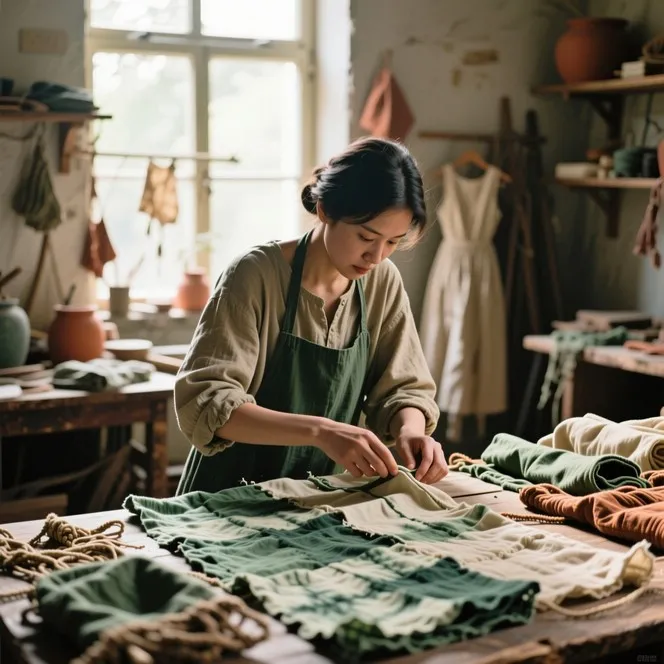
Artist-led brands collapse that chain. When a designer is also a working visual artist, the garment becomes a direct extension of their practice. It's not just inspired by art — it is the art, just in a form you can actually wear out to dinner.
That's the philosophy at the core of what platforms like AF Originals are built around. The whole premise of Wear the Art. Own the Story. isn't marketing language — it's a description of what's actually happening when an independent creator sells a hand-dyed jacket or a block-printed tote through a channel they control.
The Economics of Making Something Real
Here's the part that usually surprises people: artisanal fashion is often a better economic model for creators than the traditional wholesale route — even though the price points can be higher.
When an independent designer sells through a major retailer, they typically receive somewhere between 40 and 60 percent of the wholesale price, which is itself already marked down significantly from retail. By the time you account for production costs, shipping, and the retailer's margin, a lot of the value generated by that creative work ends up somewhere other than the person who made it.
Direct-to-consumer platforms flip that math. A creator selling a limited-edition piece through their own storefront — or through a curated marketplace that doesn't take the same kind of cut — keeps far more of the revenue. That means they can produce in smaller batches, use better materials, pay fair wages to the craftspeople they work with, and still build a sustainable business.
Smaller runs also create something that mass production fundamentally can't: genuine scarcity. When a collection is limited to 50 pieces, owning one of those pieces actually means something.
Four Designers Worth Watching
Mara Solís (Los Angeles, CA) started as a muralist in the Boyle Heights neighborhood of East LA before pivoting to textile work. Her current collection layers screen-printed botanical imagery over naturally dyed linen using techniques she developed over years of working with plant-based pigments. Each piece is numbered and signed. Her drops sell out in under 48 hours, almost exclusively through her own channels and a few carefully chosen boutique partnerships.
Jonas Whitfield (Brooklyn, NY) trained as a ceramicist at the Rhode Island School of Design and brought that sensibility directly into knitwear. His garments feature irregular, hand-manipulated textures that reference the imperfect surfaces of thrown clay. He describes his collections as "functional sculpture" and prices them accordingly — but his waiting list suggests the market agrees with that framing.
Desta Amare (Atlanta, GA) blends traditional Ethiopian weaving techniques with contemporary streetwear silhouettes. She works directly with weavers in Addis Ababa, co-designing patterns that reflect her own cross-cultural identity. The result is clothing that carries an explicit geographic and personal history — something she documents openly on every product page, down to the name of the artisan who wove the fabric.
River Nakamura (Portland, OR) approaches fashion through the lens of installation art, treating each seasonal collection as a cohesive environment rather than a group of individual products. Campaign imagery is always shot in site-specific locations that relate to the collection's conceptual theme. River's pieces are designed to be layered, combined, and re-worn in ways that shift their meaning — which has built an unusually engaged community of repeat customers who see dressing as a form of creative expression.
Why Millennials and Gen Z Are Actually Paying Attention
None of this would matter commercially if consumers weren't responding. But the data — and frankly, just the vibe of how younger Americans talk about what they wear — suggests they really are.
Millennials, now well into their 30s and early 40s, grew up with fast fashion and largely feel burned by it. There's a real generational reckoning happening around the mountains of low-quality clothing that got bought, barely worn, and discarded. Many in that cohort are actively looking for a different relationship with the things they own.
Gen Z, meanwhile, has developed a fairly sophisticated skepticism of brand narratives. They've grown up watching corporations claim values they don't actually hold. What cuts through that skepticism isn't louder marketing — it's verifiable authenticity. Knowing that a garment was made by a specific person, using a specific process, for a specific reason, is the kind of provenance that actually lands.
That's a cultural opening that independent artist-designers are uniquely positioned to fill. They're not performing authenticity — they are the authentic source.
What Comes Next
The old gatekeeping structures of fashion aren't going to disappear overnight. The major houses still have enormous cultural influence, massive marketing budgets, and the kind of institutional momentum that takes decades to shift.
But the infrastructure supporting independent creators has genuinely improved. Better e-commerce tools, more sophisticated social platforms, and curated marketplaces that connect artisan designers with consumers who are actively looking for something real — all of that has lowered the barrier to entry in meaningful ways.
What's emerging isn't a replacement for mainstream fashion so much as a parallel ecosystem — one where the criteria for value are different. Not logo recognition. Not trend alignment. But craft, story, and the knowledge that what you're wearing came from an actual human being with an actual point of view.
That's the bet AF Originals is making. And based on where the culture seems to be heading, it's looking like a pretty smart one.