Beyond Beige: The Independent Designers Bringing the World's Color Traditions Back to Your Wardrobe
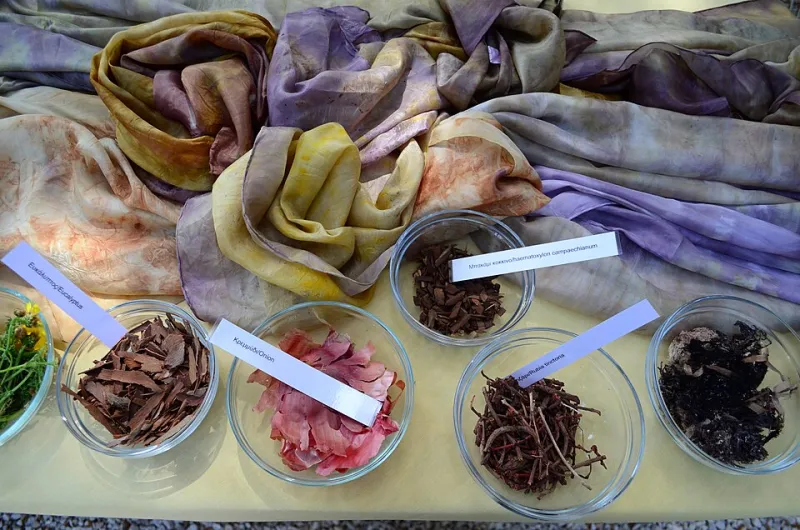
Photo: SEN Heritage Looms - Sophia Tsourinaki, CC BY-SA 4.0, via Wikimedia Commons
Open almost any mainstream fashion retailer's website right now and run your eye across the "new arrivals" section. Chances are you'll land on a familiar range — dusty sage, warm ivory, a muted terracotta that's been quietly everywhere for three seasons, and some variation of what marketers love to call "timeless neutral." It's not ugly. It's just... safe. Homogenized in a way that's hard to name until you see its opposite.
The opposite, as it turns out, is showing up in the work of independent artisanal designers who are pulling from something much older and more specific than trend forecasting. They're working with color traditions that come from their own cultural backgrounds — from West African indigo dyeing, South Asian lac and turmeric pigments, Mesoamerican cochineal, Indigenous American earth tones with deep regional specificity — and the result is fashion that doesn't look like anything you'll find at a mall.
Why Mainstream Fashion Keeps Defaulting to the Same Palette
It's worth asking why "neutral" in American fashion almost always means a narrow slice of the spectrum. The short answer is market research — brands design for the broadest possible appeal, which tends to flatten adventurous color choices down to safe ones. The longer answer involves a historical aesthetic hierarchy that positioned European color sensibilities as the default "sophisticated" standard and treated vibrant, complex non-Western palettes as exotic, seasonal, or trend-dependent.
That framing has real consequences. It means colors with centuries of cultural and craft history behind them get treated as novelties — pulled in for a "global" capsule collection and dropped again when the trend shifts. The depth behind those colors, the knowledge systems and labor and meaning embedded in them, rarely makes it into the conversation.
Independent designers rooted in those traditions are pushing back on exactly that dynamic.
The Craft Behind the Color
To understand what makes these palettes different, it helps to understand where they come from. Natural dyeing is a science as much as it is an art — and different cultural traditions have developed sophisticated, region-specific approaches over generations.
Take indigo. The deep blue produced through natural indigo fermentation isn't a single color — it's a spectrum that shifts based on the number of dye baths, the mineral content of the water, the fiber being dyed, and the mordanting process used to fix the color. Japanese aizome, West African adire, and South Asian indigo traditions all produce different blues from what is technically the same plant. The knowledge required to work within each tradition is substantial and culturally specific.
Or consider cochineal, a dye derived from a small insect native to the Americas that produces an extraordinary range of pinks, reds, and purples depending on pH levels and mordants. Pre-colonial Mesoamerican textile traditions developed highly refined cochineal dyeing techniques that were sophisticated enough to astonish European traders on contact. That knowledge didn't disappear — it survived, evolved, and is being actively practiced and reclaimed by Indigenous and Latinx designers today.
These aren't just interesting backstories. They're the reason the colors look the way they do — alive, complex, slightly different in every light.
Reclaiming Aesthetics as Resistance
For many of the designers working in this space, the choice to center their cultural color traditions isn't only about craft. It's also a deliberate act of aesthetic resistance.
When fashion's mainstream decides that a particular palette is "having a moment," it typically means a trend machine has extracted a surface-level version of something with deep cultural roots and repackaged it without context. The designer who grew up watching their grandmother prepare natural dyes using techniques passed down through generations isn't doing the same thing as a fast fashion brand that slaps "earthy global inspiration" on a marketing deck.
The difference is authorship. And increasingly, US consumers are starting to care about that distinction.
"There's a version of my work that gets called 'bohemian' or 'ethnic' by people who don't know what they're looking at," one Brooklyn-based designer working with West African textile traditions described in a recent conversation. "And there's what it actually is — which is a specific visual language with history and meaning. I'm not making something exotic for someone else's wardrobe. I'm making something that comes from where I come from."
That specificity is exactly what separates artisanal fashion from the trend cycle's version of "global influence."
What US Consumers Are Starting to Seek Out
There's a real appetite in the US market for fashion that feels genuinely different — not different as in "this season's new neutral," but different in a way that requires some engagement. Customers who've spent time building intentional wardrobes are often the ones most drawn to these palettes, partly because they've gotten bored with the safe range and partly because they're interested in what their clothes mean.
Learning to appreciate non-Western color traditions as a consumer doesn't require an art history degree. It mostly requires slowing down. When you encounter a piece dyed with natural indigo or colored with plant-based pigments, it looks different from synthetic dye in ways that are hard to articulate but easy to feel — there's a depth and variation to it that synthetic processes don't replicate. Colors shift across the surface of the fabric. They age differently, often more beautifully.
Asking about the dye process when you're considering an artisanal purchase is one of the simplest ways to start building that literacy. Good makers are almost always happy to talk about it. And the more you understand about how a color was made, the more interesting the piece becomes.
Appreciating Without Appropriating
One tension worth naming: there's a real difference between appreciating cultural color traditions and wearing them as costume. For US consumers, especially those outside the traditions in question, that line is worth thinking about.
The most straightforward way to engage thoughtfully is to buy directly from designers who are working within their own cultural traditions. When you purchase a piece from a maker whose work is rooted in their own heritage, you're not extracting aesthetics from a culture — you're supporting the person who carries that knowledge and has the right to shape how it's expressed.
That's a fundamentally different transaction than buying a mass-produced piece that borrowed surface-level color references without credit or context.
A Different Kind of Color Education
At its best, this is what artisanal fashion offers that the mainstream market can't: an education that happens through wearing. When you own a piece dyed with turmeric and pomegranate, or colored through a traditional shibori process, you start to notice the way light hits it differently than anything else in your closet. You start to ask questions. You start to see color differently.
That's the AF Originals proposition in a nutshell — that clothes can be more than decoration. They can be carriers of knowledge, tradition, and genuine creative vision. The independent designers working with non-Western color systems aren't just making beautiful things. They're making a case for a wider, richer, more honest aesthetic conversation.
Beige will always have its place. But the world's color traditions are so much bigger than that.