Breaking Down the Price Tag: The Real Reasons Artisanal Fashion Costs What It Does
Let's be upfront about something: sticker shock is real. You've probably picked up a beautifully made artisanal piece, flipped over the tag, and done a quick mental comparison to something you could grab for a fraction of the price at a fast fashion retailer. The gap can feel hard to justify — until you understand what you're actually looking at.
The price of a handcrafted garment isn't arbitrary. It's a direct reflection of a chain of decisions, people, and practices that look almost nothing like the supply chain behind mass-produced clothing. Let's break it down, layer by layer.
1. The Materials Are a Different Category Entirely
Fast fashion's business model depends on driving material costs as low as possible. That often means synthetic blends, conventionally grown cotton treated with heavy pesticides, and fabrics engineered to look good in a product photo but not necessarily to last.
Artisanal makers tend to work with an entirely different tier of materials. We're talking about organic or sustainably sourced natural fibers — linen, wool, silk, deadstock fabric — that cost significantly more to produce and procure. A yard of ethically sourced Japanese selvedge denim, for example, can run four to six times the price of standard denim fabric.
Beyond fiber content, small-batch makers often source from specialty mills or local suppliers, which eliminates the price advantages that come with massive bulk orders. The tradeoff? The material quality is genuinely superior — and your skin (and the planet) tends to notice.
2. Labor Is Paid Fairly — and That Costs Money
This is probably the single biggest driver of the price difference, and it's worth sitting with.
A fast fashion garment might pass through a production facility where workers earn poverty-level wages in countries with limited labor protections. That's how a top can retail for $12. The cost is real — it's just being absorbed by someone else, somewhere else, in ways that rarely make it into the product description.
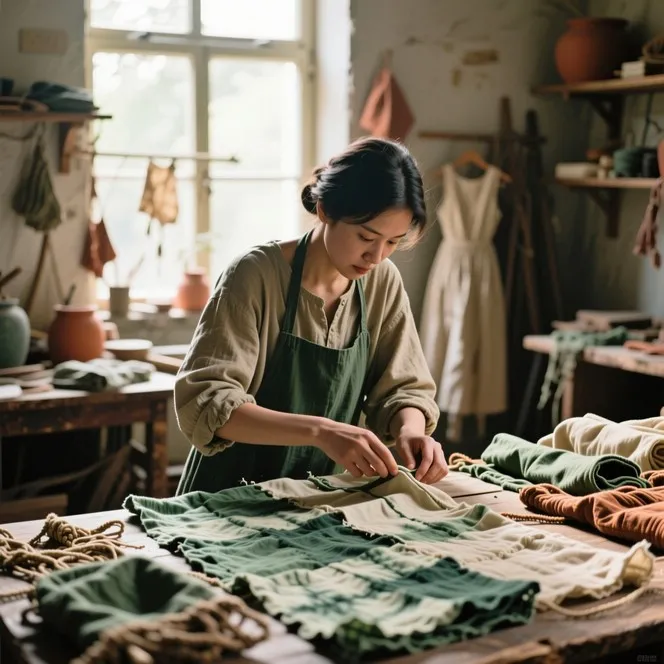
When you buy from an independent artisan or a small ethical brand, you're paying a maker who charges for their actual time at a living wage. A single hand-sewn jacket might represent 15 to 25 hours of skilled labor. At a fair hourly rate, that alone accounts for a significant portion of the final price — and that's before materials, overhead, or profit margin enter the equation.
This isn't a premium for its own sake. It's what fair compensation actually looks like.
3. Small-Scale Production Has No Economies of Scale
One of the most misunderstood aspects of artisanal pricing is the structural disadvantage that small makers operate under. Large manufacturers spread fixed costs — equipment, facilities, administrative overhead — across millions of units. A small-batch maker spreads those same categories of costs across dozens or hundreds of units.
The result is that the per-unit overhead for a handcrafted piece is dramatically higher than for something produced at industrial scale, even if the absolute dollar amount of the overhead is much smaller. A shared studio space, quality sewing equipment, pattern-making tools, and packaging materials all factor into the final price of every piece a small maker produces.
4. R&D and Creative Development Are Baked In
Every original design represents an investment of creative energy that doesn't show up in the fabric or the stitching, but absolutely shows up in the price — and should.
Artisan designers spend hours, sometimes months, developing a concept: sketching, sampling, iterating, scrapping, and starting over. Pattern development alone can require multiple rounds of muslins and fit adjustments before a single production piece is cut. That intellectual and creative labor is part of what you're purchasing when you buy an original design.
This is genuinely different from buying a garment that was reverse-engineered from a runway trend and knocked off at scale. You're paying for someone's original vision — the equivalent of buying a painting rather than a print.
5. Sustainable Practices Carry Real Costs
Ethical production isn't free, and the premium for doing things right is substantial. Certifications for organic materials, fair trade compliance, and sustainable manufacturing processes all involve fees, audits, and operational adjustments that add to the cost of doing business.
Beyond certifications, sustainable practices often mean slower production timelines, more careful waste management, and a commitment to using materials and processes that don't externalize environmental costs onto communities or ecosystems. These choices are deliberate and admirable — and they're reflected in the price of the finished product.
A garment that costs more but was produced without harming a watershed or exploiting a workforce is, by any honest accounting, the better deal.
6. The Markup Is Smaller Than You Think
Here's a number that tends to surprise people: the profit margin on artisanal fashion is often considerably lower than on mass-market clothing, not higher.
Fast fashion brands operate on razor-thin per-unit costs but make their margins through volume and markup multiples that can reach 400-600% over production cost. Artisan makers, by contrast, typically work with margins that are modest by industry standards — enough to sustain the business and compensate themselves fairly, but not the kind of numbers that suggest anyone is getting rich.
When you see a $250 handcrafted dress, the maker might be netting $40 to $60 after accounting for materials, labor, overhead, and platform fees. That's a very different picture than the sticker price implies.
What You're Actually Buying
So when you invest in an artisanal piece — whether it's a hand-dyed silk scarf, a structured coat made from responsibly sourced wool, or a pair of hand-stitched leather mules — here's what that price tag actually represents:
- Quality materials that perform and age beautifully
- Fairly compensated skilled labor from people who care about their craft
- An original design born from genuine creative investment
- Sustainable production practices that don't pass costs onto the planet
- A business model that can actually sustain the makers you want to keep making
At AF Originals, we think about this every time we add a piece to our collection. The question isn't whether something is expensive — it's whether the price reflects genuine value. In our experience, the pieces that cost more because they're made right are almost always the ones that earn their place in your closet for years to come.
Understanding the economics doesn't just change how you shop. It changes how you see the clothes themselves.