Fewer Pieces, More Purpose: How Intentional Dressing Is Replacing the Haul Culture Hangover
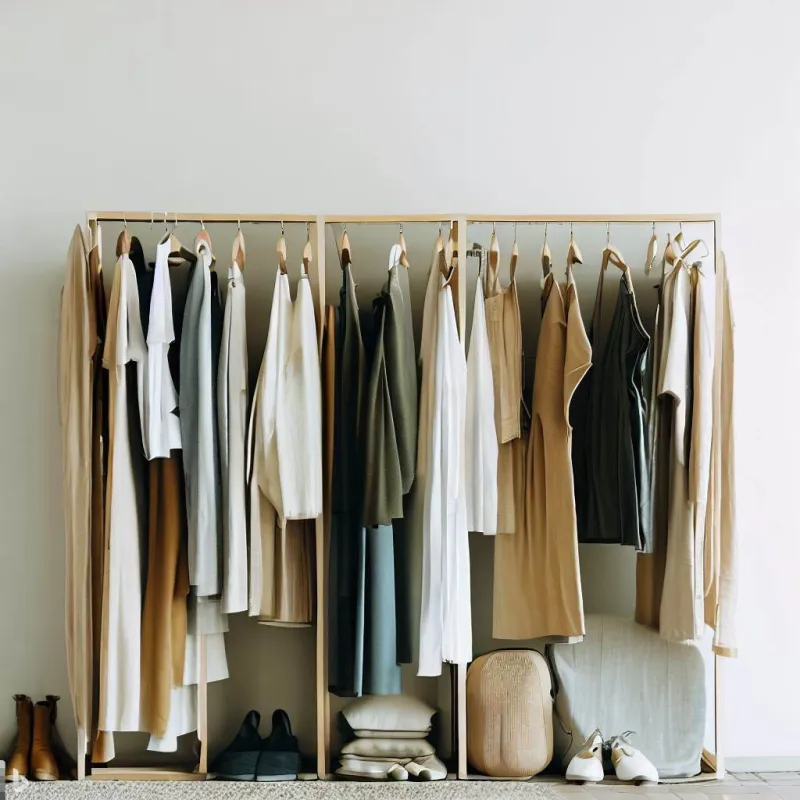
Photo: minimalist artisan handmade clothing capsule wardrobe flat lay natural fabrics, via miro.medium.com
Somewhere between the third unworn blazer and the sixth pair of trend-chasing sneakers, something clicked for Maya Torres, a graphic designer from Austin, Texas. "I opened my closet one morning and felt nothing," she says. "I had so many clothes and literally nothing to wear — nothing that felt like me." She spent the next six months donating, selling, and reconsidering almost everything she owned. What replaced it? Twelve pieces, each one chosen with the kind of care most of us reserve for major life decisions.
Maya isn't an outlier. Across the country, a quiet but determined movement is reshaping how Americans think about getting dressed. Call it the capsule rebellion — a collective pushback against the relentless churn of fast fashion, micro-trends, and the emotional exhaustion that comes with trying to keep up.
The Burnout Is Real
Fast fashion burnout is a legitimate phenomenon, even if it doesn't have a clinical diagnosis. After years of being told that style means staying current — and that "current" changes every six to eight weeks — a lot of shoppers have simply hit a wall. The dopamine hit of a new haul fades faster than the shipping confirmation email. The guilt of a pile of barely-worn clothes heading to a landfill starts to outweigh the thrill of the purchase.
According to a 2023 report from ThredUp, the average American throws away about 81 pounds of clothing per year. That number has a way of landing differently when you start thinking about what each of those items cost — not just financially, but in terms of the resources, labor, and creative energy that went into making them.
What's emerging on the other side of that burnout isn't a rejection of fashion itself. It's a rejection of fashion on someone else's terms.
What a Capsule Built on Craft Actually Looks Like
The original capsule wardrobe concept — credited to London boutique owner Susie Faux in the 1970s and later popularized by Donna Karan — was about versatility and investment. But the modern version has evolved into something more personal and more radical. It's less about a prescribed number of neutral basics and more about curating a wardrobe that functions as a kind of autobiography.
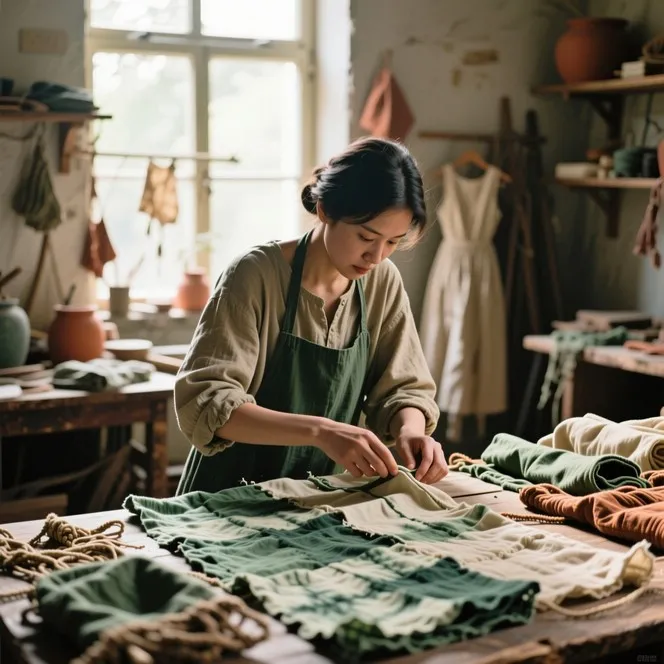
For Derek Okafor, a photographer based in Brooklyn, that meant replacing a closet stuffed with brand-name streetwear with a tightly edited collection of artisanal pieces sourced from independent makers. "Every single thing I own now has a reason for being there," he says. "I know who made my jacket. I know what the dye process was. That sounds precious, but honestly, it just means I actually wear everything I own."
This is the practical magic of intentional dressing: when you know the story behind a garment, you form a different relationship with it. It stops being a commodity and starts being something closer to a companion.
The Psychology of Owning Less, Better
There's some interesting psychology behind why this approach feels so satisfying. Research on decision fatigue suggests that having fewer choices — when those choices are genuinely good ones — reduces stress and increases confidence. A wardrobe full of pieces you truly love, rather than pieces you settled for because they were on sale or trending, simplifies the daily ritual of getting dressed in a way that has a measurable effect on your mood.
Beyond the practical, there's an identity piece at play. Fast fashion, by design, encourages you to adopt a new aesthetic every season. Artisanal fashion asks you to do the harder, more rewarding work of figuring out who you actually are and dressing accordingly. The pieces you choose become expressions of your values — your commitment to craft, to sustainability, to supporting independent makers over faceless corporations.
Jessica Huang, a teacher and part-time ceramicist from Portland, Oregon, describes it this way: "I started thinking about my wardrobe the same way I think about my pottery. I want things that are made with intention, that have a human hand in them. Mass production just doesn't give me that."
Artisanal Pieces as Long-Term Investments
One of the most persistent misconceptions about building a wardrobe around handcrafted fashion is that it's prohibitively expensive. And yes, the upfront cost of an artisan-made piece is almost always higher than its fast fashion counterpart. But the math shifts dramatically when you factor in cost-per-wear.
A $300 hand-sewn linen shirt that you wear twice a week for five years costs you roughly $0.58 per wear. A $30 shirt that falls apart after ten washes costs $3 per wear — and ends up in a landfill. The economics aren't even close.
More importantly, high-quality artisanal pieces are designed to age well, not to be discarded. Natural fibers, careful construction, and timeless silhouettes mean that a piece purchased today can realistically be something you're still reaching for in fifteen years. That kind of longevity fundamentally changes the relationship between buyer and garment.
Starting Your Own Capsule Rebellion
If you're feeling the pull toward a more intentional wardrobe, the starting point isn't shopping — it's editing. Before you add anything new, spend time with what you already own. What do you actually wear? What makes you feel like yourself? What's been hanging untouched for a year?
From that honest inventory, you can start to identify the gaps — not the gaps that trend reports tell you about, but the genuine functional and aesthetic gaps in your wardrobe. Then fill those gaps slowly, deliberately, with pieces that have a story worth telling.
At AF Originals, that's the philosophy behind everything we carry. Each piece is chosen because it represents genuine craft, a real maker's vision, and the kind of quality that earns a permanent spot in a considered closet. We're not here to sell you a trend. We're here to help you build something that lasts.
The capsule rebellion isn't about having less. It's about having exactly enough — and making sure every single piece earns its place.