You're Not the Owner, You're the Caretaker: Stewarding Original Fashion for the Next Generation
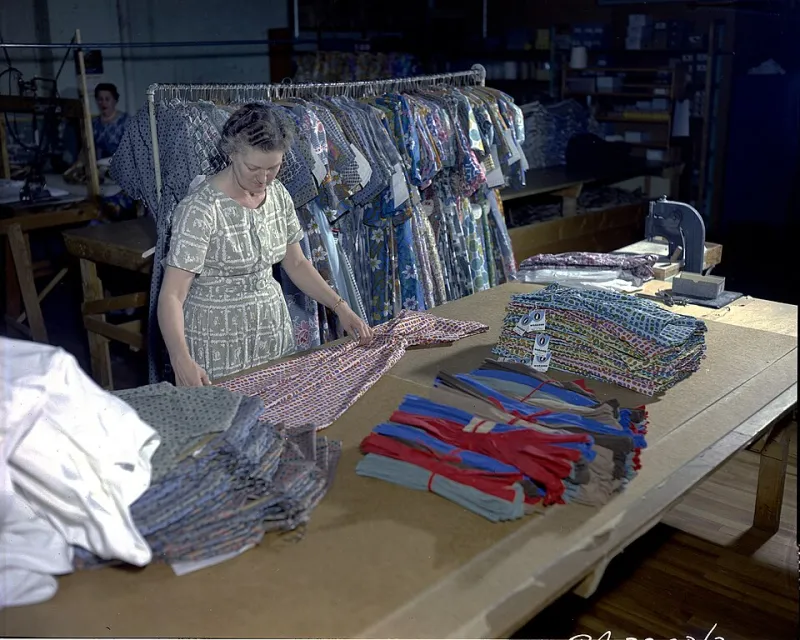
Photo: Provincial Archives of Alberta, No restrictions, via Wikimedia Commons
Let's say the uncomfortable part out loud: when you buy a one-of-one garment, you don't really own it. You're borrowing it from the timeline. Someone made it by hand, it exists once, and — if you do your job right — it will outlive your interest in it. At some point, it moves on: to a child, a friend, a museum, a stranger who finds it at an estate sale and can't believe their luck.
That reframing changes everything about how you treat it. A mass-produced blouse is a purchase. A handwoven coat is a custodianship. And custodianship comes with responsibilities.
Start a File, Not a Pile
Most people's garment documentation is a vague memory: 'I think I bought this in 2019 from that woman at a market in Asheville?' That's not provenance — that's folklore. Every original piece you own deserves a record, and it takes ten minutes to make one.
Create a simple document — a shared note, a spreadsheet, a shoebox of index cards, whatever you'll actually maintain — and for each piece log:
- The maker's full name and, if possible, their studio or location
- Date and place of purchase, and price paid
- Materials and techniques, ideally copied from any certificate, tag, or listing
- The story — why you bought it, where you've worn it, what it means to you
That last one matters more than you'd think. Fifty years from now, the fabric composition will be verifiable; the story won't be. A handwritten note that says 'wore this to my sister's wedding, cried in the bathroom, worth it' is provenance no database can replicate.
Care Like You Mean It
Archival care isn't about wrapping everything in acid-free tissue and never wearing it. Wear your pieces — that's the point. But wear them like a librarian handles a first edition: with attention.
Wash less, air more. Most handcrafted garments don't need laundering after every wear. Spot-clean, air out, and reserve full washing for when it's genuinely needed. Every wash cycle is a small act of erosion.
Follow the maker's instructions. Naturally dyed textiles often want cold water, pH-neutral soap, and shade drying. Handwoven wools may want hand-washing and flat drying. If you lost the care card, email the maker — most will happily re-send it, and the exchange adds to your documentation file.
Store thoughtfully. Padded hangers for structured pieces, folded and boxed for heavy knits (hanging stretches them), breathable garment bags instead of plastic, and away from direct sunlight, which fades natural dyes faster than most people expect. Cedar blocks beat mothballs in every category except nostalgia.
Repair, don't retire. A loose seam or a worn elbow isn't damage — it's a maintenance schedule. Building a relationship with a local tailor or learning basic mending keeps a piece in circulation instead of in a landfill.
The Passing Down Part
Here's where custodianship gets interesting. There's a growing practice — visible in estate sales, archival donations, and family handoffs — of treating significant garments as inheritances, the way families once treated watches and wedding rings.
If you intend a piece for someone specific, say so, and better yet, put it in writing. Tell the story while you're alive to tell it. Wear the piece with the person you're leaving it to. A coat bequeathed with its narrative attached lands completely differently than a coat discovered in a closet.
And if there's no one in line? Consider donation to a costume collection, a fashion archive, or a design school. Many university programs and regional historical societies accept well-documented contemporary craft, and a piece with its maker named is far more valuable to them than an anonymous garment ever could be.
The Museum You Already Have
We tend to think of museums as buildings with donation boxes. But if you own original work — pieces made by named hands, in limited number, with stories attached — you're already running a very small one. Its collection policy is your purchasing decisions, its conservation department is your laundry routine, and its docent is you.
That sounds like pressure, but it's really permission. Permission to buy fewer things and know them deeply. Permission to spend on one piece that matters instead of ten that don't. Permission to see your closet not as inventory but as a collection with a future.
Own the story, sure. But remember: eventually, you hand the story on. The garment just needs you to keep it in good enough shape for the next narrator.