No Fitting Rooms, No Fear: A First-Timer's Guide to Ordering a One-of-One Piece
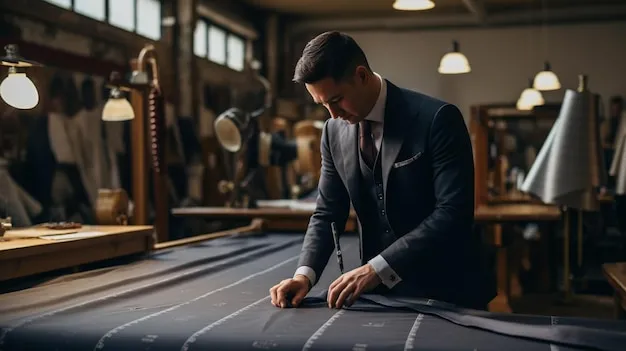
Photo: tailor measuring client fabric fitting atelier workshop, via img.freepik.com
There's a moment, right before you hit 'inquire' on a one-of-one piece, where the hesitation kicks in. You've spent your whole life grabbing a size medium off a rack, and now you're being asked for your inseam? Your mood board? Your thoughts on sleeve cap? Take a breath. Commissioning an original garment is less like a job interview and more like working with a tailor who actually wants to hear from you. Here's what the whole process looks like, step by step.
It Starts With a Conversation, Not a Credit Card
Unlike standard e-commerce, most artisan makers won't take your money upfront and disappear. The first exchange is usually a message thread or a short call where the designer asks questions: What's the occasion? What do you already own that you love? How do you actually spend your days? Be honest. Saying 'I want something beautiful but I mostly sit in an office and walk my dog' is more useful than pretending you attend gallery openings weekly.
Many makers will ask for inspiration — a Pinterest board, a few saved Instagram posts, even a photo of a vintage jacket you've worn to death. This isn't homework; it's shorthand. It helps the maker understand whether you want quiet and architectural or bold and expressive.
Measurements: Easier Than It Sounds
Here's the part that scares everyone, and it shouldn't. Most makers send a simple guide — bust or chest, waist, hips, shoulder width, arm length, sometimes inseam — and ask you to measure over snug clothing with a soft tape. If you don't own a tape measure, they cost about three dollars at any drugstore, or you can visit a local alterations shop and have it done in ten minutes.
A few practical tips:
- Don't round down. Nobody's judging. The maker is building a garment around your body, not a number.
- Measure twice, ideally with a helper. Shoulder width is genuinely hard to do alone.
- Ask what measurements the maker actually needs. Some only want four or five numbers because their pattern style doesn't require more.
If you own a garment that fits you beautifully, offer its measurements too. It's the fastest way to communicate fit without a single tape measure.
The Waiting Is a Feature
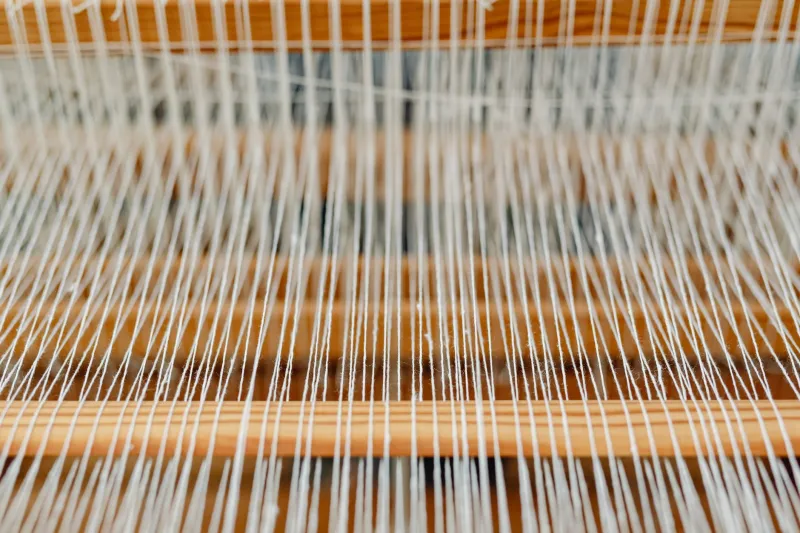
Once you've approved a sketch, fabric swatches, or a quoted price and timeline, the piece goes into production — and this is where expectations matter most. A one-of-one garment typically takes anywhere from four weeks to several months depending on complexity, dyeing processes, and the maker's queue. Handwoven fabric alone can take weeks before a single seam is sewn.
Good makers communicate along the way: progress photos, fabric arrival updates, a note when your piece hits the sewing table. If a timeline was quoted and life happens, most will tell you. The wait can feel long if you're used to two-day shipping, but it's also the entire point — you're receiving something that didn't exist until you asked for it.
The Fitting and the Finish
Many makers build in a try-on checkpoint, especially for structured pieces like jackets or dresses. This might mean a basted fitting (the garment loosely stitched so adjustments are easy) or a mock-up in cheaper fabric first. If the maker is remote, they may ask for photos or a video call while you wear the piece.
Then comes the final version: finished seams, handworked details, often a label with the maker's name and the piece's story. Some designers include care instructions specific to the fabric — and unlike mass-produced tags, these are worth actually reading. A naturally dyed silk wants different treatment than a poly-blend blouse.
Small final alterations are normal and usually built into the price. If a hem needs an inch or a cuff needs tightening, say so. That's not fussiness; that's the process working as designed.
What It Costs (and Why That's Okay)
One-of-one pricing reflects real labor: design time, fabric sourcing, construction, and revisions. Depending on the maker and the piece, expect anywhere from a few hundred dollars for a simple top to several thousand for a tailored coat. Most makers take a deposit upfront and the balance on completion. Payment plans are increasingly common — just ask.
Your First Piece Won't Be Your Last
Here's what nobody tells you: the second commission is easier. You'll know your measurements, you'll have a sense of what silhouettes work on you, and you'll have a relationship with a maker who already understands your taste. Many collectors of original fashion describe their first custom piece as the moment shopping stopped feeling like a transaction.
So if you've been circling that maker's page for months, consider this your nudge. Ask the questions. Send the mood board. The worst outcome is a garment that's almost perfect and gets one adjustment. The best outcome is a piece you'll be wearing — and talking about — a decade from now.