Name the Hands That Made It: How Designer-Maker Partnerships Are Changing What Fashion Transparency Looks Like
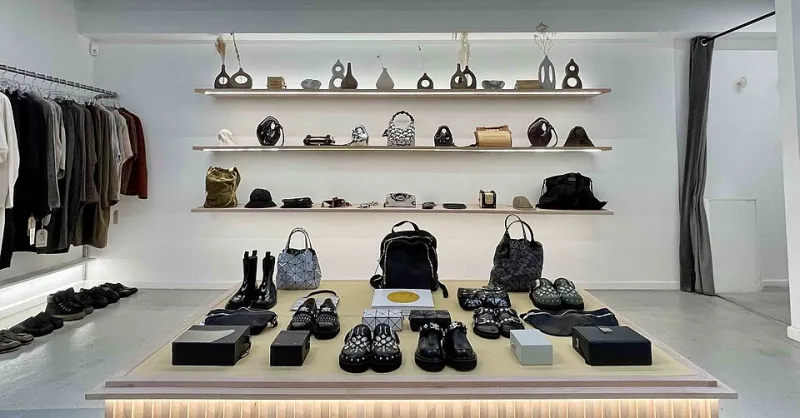
Photo: JasminUJNG, CC BY-SA 4.0, via Wikimedia Commons
For most of fashion's history, the supply chain was treated like a trade secret. You knew the brand. Maybe you knew the lead designer. Everything else — the mill that wove the fabric, the workshop that cut and sewed the garment, the family business that produced the buttons — was invisible by design.
That model is starting to crack, and the pressure isn't coming from the top. It's coming from a generation of independent designers who have real, personal relationships with the people they work with — and who see no reason to pretend otherwise.
When "Made In" Isn't the Whole Story
The "made in" label has been the fashion industry's standard gesture toward transparency for decades. And while country of origin matters, it doesn't tell you much about the actual conditions, relationships, or craft involved in producing a piece. A garment made in the US could come from a highly ethical small-batch workshop or a miserable fast-fashion operation. The label doesn't distinguish.
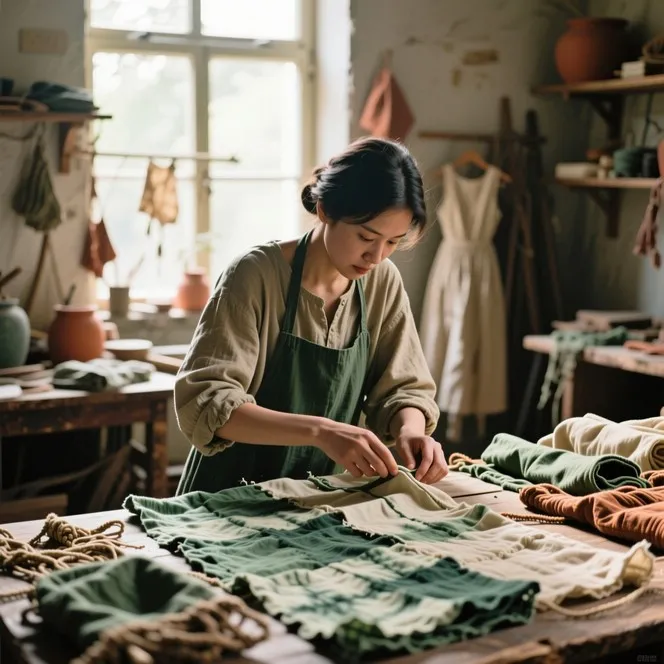
What a growing cohort of independent designers are doing instead is something more specific: naming names. Not just "handwoven in Oaxaca" but crediting the individual cooperative, the specific weaver, sometimes the family whose technique is being used. Not just "natural dye" but identifying the dyer, their process, and why this particular collaboration happened.
This kind of specificity changes the nature of what you're buying. The piece stops being a product and starts being a record of a relationship.
The Economics of Knowing Your Maker
There's a practical dimension to this that doesn't get talked about enough. When a designer has a genuine, ongoing relationship with a maker — rather than a transactional one brokered through a sourcing agent — the economics work differently for everyone involved.
A weaver who knows a designer will return season after season has reason to invest in their craft, to experiment, to take risks with new techniques. A designer who knows their dyer personally can have actual conversations about color — not just submit a Pantone number and hope for the best. A small ceramics studio that produces buttons or closures for an apparel line isn't just a vendor; they're a creative collaborator with real input into the final piece.
These micro-economies don't scale the way fast fashion does. But that's kind of the point. They're built for depth, not volume. And the pieces that come out of them carry that depth in ways that are genuinely hard to replicate at scale.
Transparency as Creative Credit
In music, in film, in publishing — crediting collaborators is standard practice. The fashion industry has historically been reluctant to extend that same courtesy to the craftspeople who execute a designer's vision. The result is a culture where the designer gets a name and the maker gets anonymity, which quietly reinforces a hierarchy that doesn't reflect how the work actually happens.
Some independent designers are actively pushing back on this. You're starting to see lookbooks and product pages that read more like liner notes — acknowledging the specific artisan who hand-stitched the embroidery, the small-batch mill that developed a custom textile, the community workshop that trained the seamstresses. It's a cultural shift as much as a business practice.
For customers, this kind of credit offers something that conventional fashion marketing rarely does: a reason to care about the piece beyond how it looks. When you know that the indigo-dyed fabric in a jacket came from a third-generation natural dye studio in Tennessee, that information becomes part of the garment's identity. It travels with the piece through its life.
What This Looks Like in Practice
The ways designers are building and communicating these partnerships vary pretty widely. Some do it through extended product descriptions that read almost like essays — walking the customer through the specific choices and collaborators involved in a piece. Others use their social platforms to introduce the makers directly, putting faces and voices to the hands behind the work.
A few are going further, structuring their businesses so that the maker relationship is actually built into the pricing and ownership model — sharing revenue more explicitly, or offering artisans co-designer credit on specific pieces. It's still relatively rare, but it's happening, and it points toward a model where "collaboration" means something more substantive than a co-branded label.
For shoppers, the practical implication is that you can start asking better questions. Who made this? Does the designer know them personally? Can you find any information about the specific workshop, mill, or artisan involved? The brands and designers willing to answer those questions in detail are usually the ones who have real answers to give.
Why This Challenges Fast Fashion in a Way That "Sustainable" Labels Don't
The fast fashion industry has gotten pretty good at absorbing sustainability language. "Eco-friendly," "responsible sourcing," "conscious collection" — these phrases have been used often enough by large brands that they've lost most of their meaning. The designer-maker transparency movement is harder to fake, because it requires something fast fashion structurally cannot provide: actual relationships.
You can't name a specific artisan if you've never met one. You can't credit a weaving cooperative if your sourcing is handled three layers of subcontracting away from your headquarters. The specificity that makes this kind of transparency meaningful is only possible when the designer has been in the room — or on the video call, or at the market — with the people doing the work.
That's what makes it a genuine differentiator rather than just another marketing angle. It's not a certification or a claim. It's a verifiable human relationship, and it shows up in the work.
The Bigger Picture
Fashion has always been collaborative. Designers have always relied on the skill of makers to bring their ideas into physical reality. What's changing is the willingness to say so out loud — and to structure the business in ways that reflect that reality.
For anyone who cares about where their clothes come from and who made them, this shift is genuinely exciting. It means the story of a piece doesn't start and end with the label. It starts with a conversation between a designer and a craftsperson, and it ends in your closet — where the work of both of them lives on.