Stitch It Back Together: Why Repairing Your Favorite Pieces Is the Most Personal Thing You Can Do With Them
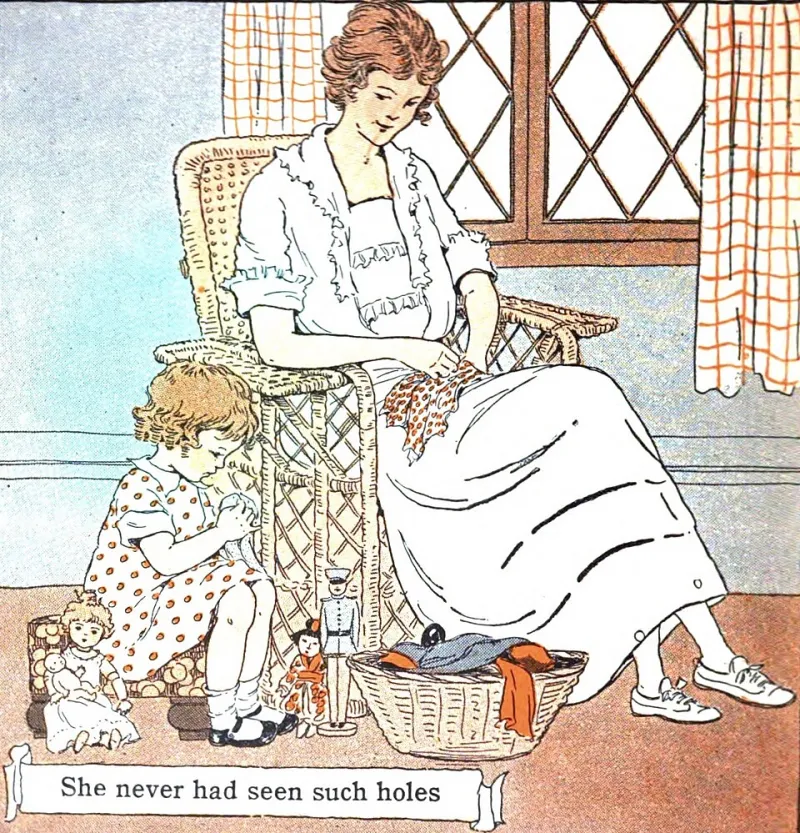
Photo: Mabel Betsy Hill, Public domain, via Wikimedia Commons
Somewhere between the first wear and the hundredth, something shifts. A favorite jacket starts to show its life at the elbows. A hand-stitched seam gives way after years of being the most-reached-for thing in your closet. For a long time, that's where most of us hit a wall — toss it, replace it, move on.
But a growing number of people are choosing a different path. They're taking those worn pieces back to the maker, seeking out skilled repair artists, or picking up a needle themselves. And in doing so, they're discovering that the act of mending isn't just about saving a garment. It's about deepening a relationship with it.
When a Repair Becomes Part of the Story
There's a Japanese concept called kintsugi — the art of repairing broken pottery with gold, treating damage as part of an object's history rather than something to hide. While that tradition lives in ceramics, its philosophy is finding a natural home in the world of artisanal fashion.
When you bring a handcrafted piece back to life through thoughtful repair, you're not erasing its wear — you're adding another chapter to it. A reinforced hem, a carefully matched patch, a re-dyed section where color has faded: these aren't flaws. They're evidence that the piece was worth caring about.
Makers who pour intention into their work tend to feel the same way. Many independent designers and small-batch producers now offer repair services precisely because their pieces are built to last — and because they want to see them actually last. It's a fundamentally different relationship than what fast fashion ever offered.
The Quality Question Nobody Asks at Checkout
Here's something worth sitting with: not every garment is worth repairing. That's not a judgment — it's just construction reality. Mass-produced pieces are often made with cost-cutting techniques that make them difficult or impossible to restore meaningfully. The thread count is low, the seam allowances are barely there, and the fabric itself may not have the integrity to hold a repair.
Artisanal pieces are a different story. The same qualities that make them worth the investment upfront — tight construction, quality materials, considered finishing — are exactly what make them candidates for a long second (and third) life. When a maker cuts a generous seam allowance or uses a hand-rolled hem, they're essentially building in the possibility of repair from the start.
This is one of the things that separates handcrafted fashion from the throwaway alternative. You're not just buying a garment. You're buying something with a future.
Who's Leading the Repair Movement
Across the US, a small but dedicated community of repair specialists and maker-restorers is emerging. Some are the original designers themselves, offering mending services for their own pieces. Others are independent repair artists — people who've built entire practices around the careful restoration of quality garments.
In cities like Portland, Brooklyn, and Austin, repair cafés and mending circles have become genuine community events. These aren't just practical gatherings — they're social ones, places where people bring their beloved pieces and learn from each other while a skilled hand guides the work. The vibe is less "sewing class" and more "story swap session with needles."
For customers who've invested in artisanal pieces, the repair experience often becomes as memorable as the original purchase. One customer who'd worn a hand-dyed linen jacket from an independent designer for three years described bringing it in for a fraying collar repair: "The maker remembered the jacket. She knew exactly what thread she'd used, what the fabric could handle. It felt like taking something to a doctor who actually knew your history."
That kind of continuity is rare in fashion. And it's exactly the kind of relationship that makes artisanal pieces feel irreplaceable.
Learning to See Wear Differently
Part of what the repair renaissance is asking us to do is unlearn something. American consumer culture has trained us to equate newness with value. A worn edge reads as decline. A faded patch reads as neglect. But that framing only makes sense if you believe a garment's best days are behind it the moment it leaves the store.
Artisanal fashion operates on a different timeline. A well-made piece often gets better with wear — softer, more fitted, more personal. And when it eventually needs attention, that's not a failure. It's just the natural rhythm of a thing that was made to be used.
Repair, in this context, is a form of attention. It's the act of saying: this is worth my time, my care, my investment. In a culture that defaults to replacement, that's actually a pretty radical stance.
A Starter Guide to Getting Your Pieces Repaired
If you've got artisanal pieces that need some love, here's how to think about next steps:
Go back to the source first. Many independent designers and small-batch makers offer repair or restoration services for their own work. Even if it's not listed on their site, it's worth asking. Most makers who care about their craft are happy to extend the life of what they've made.
Find a specialist, not just a tailor. General alterations shops can handle basic fixes, but for more complex repairs on handcrafted pieces — especially those involving natural dyes, hand embroidery, or unusual construction techniques — look for someone who specializes in restoration work. Ask questions about their experience with the specific materials involved.
Document before and after. Photograph your piece before it goes in for repair, and again when it comes back. Over time, this creates a visual record of your garment's life — a kind of personal archive that makes the story of the piece tangible.
Consider learning the basics yourself. Simple repairs like reinforcing a seam, reattaching a button, or doing a basic running stitch to close a small tear are genuinely learnable skills. There are excellent resources available through community workshops, YouTube, and small-batch makers who run occasional mending classes.
The Bigger Picture
The repair renaissance isn't just a trend. It's a recalibration of what we think fashion is for. When you repair something you love, you're opting out of the cycle that treats clothes as disposable and opting into one that treats them as worth caring for.
At AF Originals, that's the whole point. Every piece we feature is made with intention — which means it's made to outlast the moment you bought it. The makers behind these garments aren't interested in planned obsolescence. They're interested in creating something that earns a permanent place in your wardrobe, repair marks and all.
Wear the art. Own the story. And when the story needs a new chapter? Pick up a needle.